When (and Why) to Replace a
Phono Cartridge / Stylus
If you love listening to vinyl, one of the recurring maintenance and upgrade questions you’ll bump into is: when should you change your turntable cartridge (or stylus)? And: should you consider upgrading your cartridge sooner rather than later?
Here is our guide to help you balance cost, performance, and longevity — followed by some strong cartridge options from the Rega and Hana lines (two names we obviously love).
Table of Contents
Stylus wear is natural — cartridges less so
First, a clarification: most of the time when people say “replace the cartridge,” what they really need to replace is the stylus (i.e. the diamond tip + cantilever assembly). The larger cartridge body — the coils, magnets, suspension — can last for many years, provided nothing is physically damaged or degraded.
However, the stylus physically contacts the vinyl groove. Over time, even with the best care, the shape erodes or flattens, or the cantilever suspension (often made of elastomer, rubber or silicone) can degrade.
So when we talk about “changing the cartridge,” in most cases you’re replacing a stylus or the entire cartridge if it’s not serviceable.
How many hours is “too many”?
There’s no absolutely fixed lifetime — it depends on stylus profile, tracking force, record condition, cleanliness, and how careful you are with alignment. But common guidelines are:
- Many cartridge makers (especially MM / moving magnet types) suggest 800–1,000 hours of playback as the upper safe limit before you might begin to notice degradation or risk damage.
- In practice, many serious users swap their stylus every 1–3 years, depending on usage. Some in vinyl communities report hearing subtle signs — sibilance, softening of detail, or increased distortion — around 800 hours.
A good rule of thumb: track your cumulative hours (or number of records played for a rough estimate). When you approach 800h, start listening critically and inspect the stylus under magnification for wear (flattening, chipping, rounding).
If you don’t track hours, some signs to watch for:
- A shift in tonal balance: things become duller, less crisp, or lose micro-detail
- Increased distortion or sibilance, especially in mid/upper frequencies
- Skipping or mistracking on clean records
- One side of the groove sounding weaker or mismatched
- Visible signs of wear or damage under a microscope or high-magnification loupe
Also, never forget that a worn stylus will damage your vinyl — so when in doubt, swap.
In short: change (or service) the stylus around 800–1,000 hours of play, and replace or upgrade the cartridge if the body is non-serviceable or showing age.
Why Upgrading the Cartridge Can Improve Sound
If your system is decent, with a good tonearm, accurate setup, proper wiring, phono stage, speakers – the cartridge is arguably one of the single most influential elements in the analog playback chain. Here’s how and why upgrading the cartridge or stylus can yield audible benefits:
- Better tracking and less distortion
A higher quality stylus/cantilever can follow groove modulations more faithfully with lower distortion. A stylus that more precisely matches the groove shape (e.g. micro-line, Shibata, etc.) captures more of the microscopic information the cutting lathe encoded. - Greater resolution, detail, and extension
A better cartridge can reveal micro-dynamics, leading edges, ambience cues, and subtle overtones that a lower-end stylus may mask or smear. - Improved channel separation / imaging / focus
High-grade cartridges tend to preserve stereo separation more cleanly, leading to a clearer soundstage and more precise placement of instruments. - Better dynamic contrast and speed
With lighter, stiffer cantilevers and optimized suspension, transients, speed, and bass definition improve. The cartridge becomes more responsive to the music. - Lower distortion and noise floor
Precision engineering, better materials, and better internal damping reduce internal resonances, mechanical noise, and cross talk, which lowers distortion and effective noise floor. - More nuance, tonal neutrality, and musical expression
A well-chosen cartridge doesn’t just add “brightness” or “detail” — it opens up the character of your records, letting the quality (or flaw) of the pressing show rather than being blurred by a weaker stylus.
But: upgrading only helps if the rest of the chain (tonearm, phono preamp, cabling, speakers) is up to the task. Also, to extract the benefits, precise setup (azimuth, VTA, tracking force, alignment) is essential. Even a great cartridge can sound mediocre if poorly installed.
Tips to Get the Most from a Cartridge Upgrade
- Precise setup matters
Even the best cartridge can underperform if azimuth, VTA (vertical tracking angle), overhang, bias, and tracking force are off. Use alignment protractors, a good stylus force gauge, and double-check all dimensions. - Allow a burn-in period
Many cartridges (especially MC ones) need 20–50 hours of playing time to “settle in” and start revealing their full sound. Be patient — don’t judge prematurely. - Clean records & stylus regularly
Even a perfect stylus can degrade faster if it’s hitting dirty grooves. A clean stylus and clean vinyl dramatically prolong useful life and ensure optimal playback. - Monitor hours of use
Maintain a log or at least estimate how many hours you play per session. This helps you know when to get a replacement stylus before wear becomes audible. - Match the rest of your chain
Upgrading the cartridge works best when your phono stage, cabling, and amplification are not bottlenecks. A high-grade cartridge may expose weaknesses elsewhere.
Rega & Hana
Both Rega and Hana offer a range of options for you to upgrade and replace a worn stylus. They span different price and performance levels, so depending on your budget and system, you can choose accordingly.
Rega Cartridges – The new ND line and MC options.
Rega has recently updated its cartridge lineup with the ND range. Each of these MM cartridges features a Neodymium Magnet, aluminium cantilever and are differentiated by their stylus profile. These cartridges offer a simple and direct replacement and upgrade for all Rega turntables. The three point mounting system makes alignment and setup incredibly easy. We recommend the ND3 for all P1 and P1+ turntables. The ND5 offers a substantial upgrade to the Carbon cartridge typically fitted to the P2 turntables. Finally the ND7 is a great option for both the P3 and the P6.
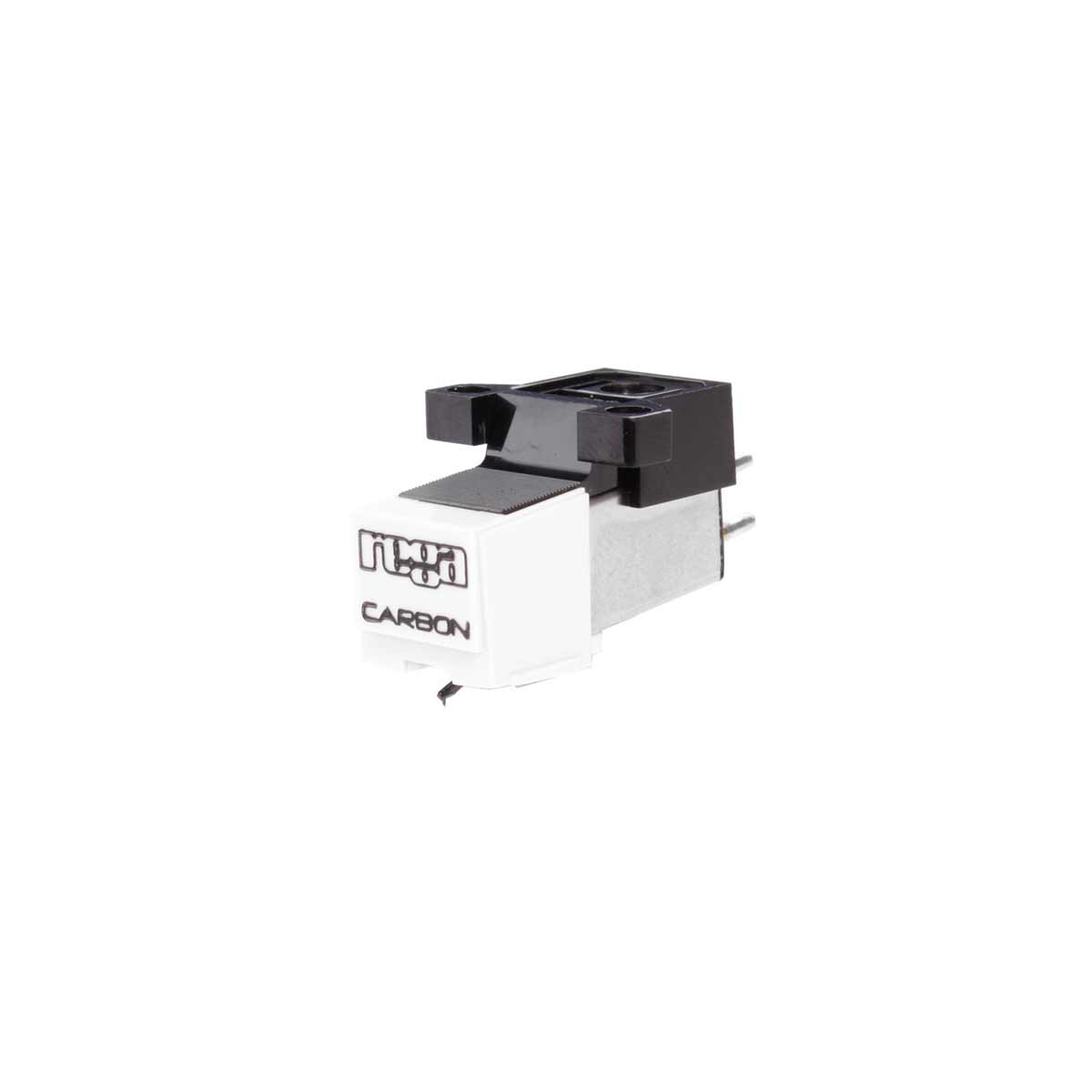


Rega’s line of MC cartridges also offer a compelling upgrade. Ideally suited to the P3 the Ania and Ania Pro provide a remarkable upgrade in sound quality when pair with a good MC phono stage. The P6 can also benefit from these cartridges but can also offer an elevated sonic experience with the new Apheta 3.
If your turntable came with a more modest cartridge, upgrading one level up yields noticeably cleaner highs, better imaging, and less distortion especially as volume increases.

Hana Cartridges
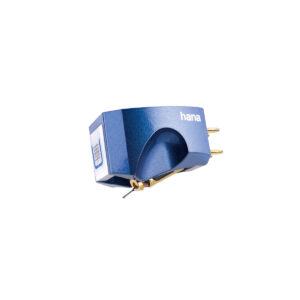
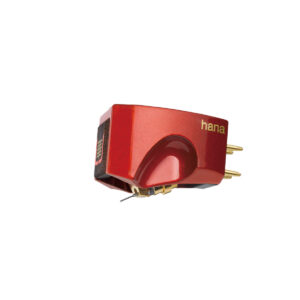
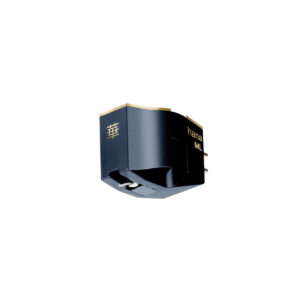
Hana is a Japanese brand (Excel Corporation) known for making some excellent moving coil (MC) cartridges. They often excel in value-to-performance and compare favourable to cartridges in much higher price points.
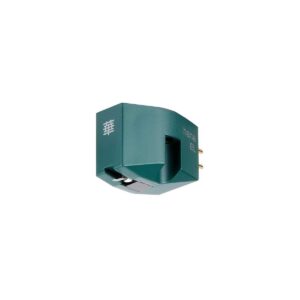
Hana EL Series MC Cartridge
This is Hana’s “entry” MC option, using an elliptical (E) stylus design. It is relatively forgiving and easier to set up than the higher-grade models. It offers:
- A smoother, musical presentation with good detail
- Good for systems that are strong but not ultra-high end
- A solid way to experience the sonic advantages of MC without going to the highest tier
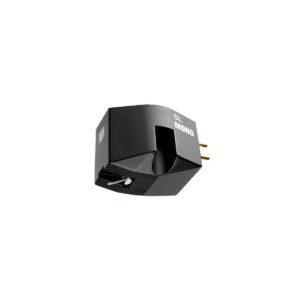
Hana SL MC Cartridge
One of Hana’s best-known mid-tier models, the SL uses a nude Shibata stylus (S = Shibata) and low output (L) design. It is widely praised for:
- A warm, sweet, non-aggressive character that’s still highly resolving
- Excellent imaging, smooth top end, and tonal balance
- A “crowd pleaser” — reviewers often note it delivers solid performance without harsh edges. For example, AnalogPlanet’s Michael Fremer reviewed the SL versus Ortofon’s Black S and found the SL to be beautifully smooth and musical. (Analog Planet)
- While it’s low output (.5 mV typical), many modern MC-capable phono stages or a step-up transformer can accommodate it nicely